So many talented guitar players all over the world are feeling stuck. Stuck in the
“eternal intermediate barrier” for years, repeating the same patterns over and over
again, while having a real difficult time expressing the music that they have inside their
head… into their instrument.
Sounds familiar?
Well, this problem is not caused by lack of talent, nor by lack of
practice. It is mostly caused by not having a real musical process.
You see, when a guitarist is engaging in all sorts of unhelpful learning processes,
the trajectory of their musical growth becomes stagnant in return (cause & effect) — and the abundance of
online freebies and their fragmented overinformation does not help here, in fact
this is the problem!
Too much noise = very little focus.
But it is important to know that there is another way…
My name is Constantine Cheimarios (born and raised in Greece) and I help guitar
players become fluent, liberated improvisers & well-rounded musicians.
16 years of experience as a guitar mentor, a couple music Degrees
and 20 years of working as a professional musician, have taught me that
successful musical growth comes down to 3 core fundamental elements:
A Structure
First of all, to grow healthy as a musician, you need structure. You need a
Roadmap.
Getting more information on your plate does not help. Having the right information
at the right time does — and this is something that the algorithm of YouTube
or social media will never be able to give you.
B Implementation
Second, and even more important, when it comes to learning music,
understanding is not enough. You need implementation.
True Musical Growth = Learning by doing! If you want to grow as a
musician, as an improviser, a performer, composer, songwriter… name it what you will,
you’ll need to focus mostly on the creative implementation of the
information & the material that you have studied and learned. This is, by the way, the
biggest part of my process and my method as a guitar mentor, and the prime focus of my
online guitar academy.
C Personalization
Third, and final, you need personalization. Getting taught through an
online automated video course by someone who is talking only to the camera and never to
you directly, is a limiting process.
Learning through a guitar teacher who doesn’t have the slightest idea about who you
are musically, what musical problems you are personally dealing with and what your personal
goals are, is a process which is simply not powerful enough — and it makes it really
hard for you to materialize your true musical potential.
Therefore, if you are stuck, it is most probably because you are missing either
— or all — of these three elements in your process:
Structure.Implementation in a creative & insightful manner.Personalization.
I have witnessed dozens of my students in the last 16 years breaking through their
plateaus by applying these 3 core elements. I have observed them getting properly unblocked,
immensely creative, improvising fluently — and most importantly
sounding musical when they play!
Therefore I have grown to become convinced that every human being is capable
of realizing their full musical potential, and mastering their craft — in their
own right.
This is all doable, as long as you:
Truly want it, heart & soul.
Have a powerful & insightful Roadmap. An efficient process.
Engage in the process & put in some focused time.
These are the principles on which I built my online guitar
academy “Modern Guitar Liberation” (MGL).
I started MGL back in 2021 with one clear mission: to provide a
true & honest Pathway to Fretboard Freedom — an insightful,
step-by-step personal coaching process that completely unblocks intermediate & advanced
guitarists, and enables them to reach their full musical potential.
The goal is not just to become a good guitar player — that’s just a by-product.
The goal is to liberate your creativity as an improviser.
To grow into a grounded, fluent and liberated musician.
Who is a good fit to become a student?
Guitar players from all across the globe, and from all walks of life, who already
play the guitar for at least a few years before they join MGL. We are talking about guitarists
who are already able to play some songs, riffs (perhaps some solos too), but they never truly
connected the fretboard into a unified musical space that would allow them to
freely express their creative inner voice — on the fly, in a real-time improvisational
context, fluently, confidently and intentionally.
The advancing guitarist’s pathbeyond the endless intermediate barrier
The 10 milestones:
(click on each of the 10 milestones if you want to
learn more & dive deeper)
1Improvisation over Chord Changes
The majority of guitar players — even advanced ones — struggle to play fully-improvised solos over chord changes. They struggle to outline the harmony of the passing changes in their solo; moreover they struggle to use the chord changes as a medium to tell their story.
Somehow soloing over Chord Changes is a vastly blurry topic for most guitar players. Basically, most guitarists know what chords they are playing only when they play the chords themselves (rhythm guitar), but when it comes to soloing, most guitarists wildly underestimate the value and the importance of the chord progression that they are soloing over. This is one of the biggest blindspots that MGL brings to the surface and to the attention of fellow aspiring guitar improvisers. Becoming confident and fluent when soloing over chord changes lies at the core of the MGL methods and of the training that our students go through.
2Connect the Fretboard into one unified musical space
Intermediate & advanced guitar players who are struggling to improvise fluently and freely are all facing the same problem (whether they realize it or not). Their learning process relies purely on memorizing shapes and geometrical patterns through what I call the “Parrot Mindset” — they will not understand what they are doing or why they are doing it. When something works they don’t know why it worked, when something doesn’t work they also don’t know why. And this is mainly because their process relies purely on muscle memory through the usage of TABs & Diagrams (or even Standard Notation, but more rarely) and without knowing the real essence of the Harmonic and the Melodic ingredients that they learn.
In order to understand this to its full extent, you need to imagine a chef who only knows how to cook by memorizing specific recipes by heart (or by reading them on the spot), without truly knowing the unique taste of each ingredient isolated from the rest — and without knowing the purpose that each ingredient serves in the grand scheme of the overall recipe.
How possible — or easy — would it be for this chef to try some brand new idea and cook improvised food that actually tastes great?
3“Chord Melody” — merge the Harmonic & the Melodic role of the instrument
Chord-Melody means to be able to play melodies and chords — at the same time. The electric guitar is clearly a polyphonic instrument, just like the piano. But the thing is, while the majority of piano players do that from their early beginning stages (playing melodies & chords at the same time is something that piano players learn to do from their very first lessons), the majority of electric guitarists don’t really do that — even when they reach the “advanced” stage after several years of playing the instrument.
Since the guitar is a proper polyphonic instrument, a guitar player who wants to be liberated and fluent on the instrument needs to be able to take their favorite songs and play the vocal melody together with the chords simultaneously on their guitar — with good timing/groove and good sound.
4Develop Solid Rhythmic Skills
A massive blind spot (perhaps the biggest one) for most intermediate guitarists is that their timing is “shaky”. The minute they switch a position on the fretboard or try to play something slightly uncomfortable — or perhaps something unplanned — they will start dragging behind or rushing ahead of the beat. Furthermore, they usually play only basic rhythms that focus heavily on the downbeats and find it really hard to play syncopated rhythms (syncopation means to play notes that don’t fall on the downbeat but in the “space” between the downbeats). It is vital for a good musician to be able to play freely with the sub-divisions.
One way to tell straight away is when a guitarist jams with a drummer who likes to play creatively by utilizing rich, playful and syncopated rhythmic patterns that deviate from the expected and standard drum patterns. A guitar player with weak — or perhaps basic — rhythmic skills will find it exceptionally hard to stay on the beat and to jam properly or comfortably in this situation.
No matter how well a guitarist learns the fretboard or how excellent one’s technique is, if one doesn’t have a strong sense of rhythm & timing, then whatever they play will always lack confidence, clarity and strong intention.
5Be stylistically multidimensional
Most electric guitar players come from a Rock / Blues (or perhaps Metal) background and therefore whenever they play other styles of music such as Funk, Jazz, Fusion, Bossa Nova, Soul, Rhythm & Blues, or even Reggae, they end up sounding like a Rock player when playing these styles.
We basically need to learn how to speak the “language” of each style — and how to create all these little nuances that will enable us to play faithfully to each style. And this is such a vital issue because playing a variety of genres and making your guitar playing adapt to the language of each style offers a musician a great deal of freedom and a deeper connection to the overall language of music.
6Master the Art of Musical Practice
Most people who learn the electric guitar do it in a self-taught manner or with limited sporadic lessons, and this usually causes them to stay unfocused and unstructured for several years (sometimes decades) and to jump aimlessly between different topics. Therefore they develop a wide variety of non-beneficial habits which in return causes them to plateau and stay stuck.
But musical practice is not supposed to be like that. It is an art in itself, a form of meditation that causes the human brain to create incredible new neuron connections. It would make complete sense to say that musicians who practice properly truly expand their human horizons.
A student who joins MGL gets proper training on realizing what their ineffective habits are and how to re-configure them to their own benefit. Furthermore, MGL students get trained on how to practice in a goal-oriented, result-based, focused and structured manner that prioritizes efficiency, time-saving and real benefit.
7Acquire a Structured Roadmap
The problem begins with lack of structure. When the algorithm of YouTube, Facebook Groups, Instagram Reels — and god forbid TikTok — dictates and directs your practice “curriculum” and the pathway of your musical studies, you are not growing as a musician, you are just getting lost, detoured and overwhelmed by the fragmented overinformation.
Self-taught guitarists who use the freebies on the internet as their main way to grow their musical skills will often feel lost or stuck, and usually that’s due to the fact that this way of learning does not provide a clear Roadmap. Jumping from one random YouTube lesson to another is not the solution to the problem (even if these lessons are actually good), nor is it to seek for answers & tips from random people on FB groups. All of these just add to the overall feeling of overwhelm and to the lack of direction — there is no clear pathway, only scattered dots that never connect.
Guitarists who want to truly reach their full potential need the real solution of a structured curriculum where the lessons/steps within it build incrementally on each other to connect the dots and provide powerful learning. That’s how you clearly see the Big Picture.
8Experience Personalized Guidance and its transformational powers
There are several online automated video guitar courses out there that do indeed provide guitar students with a structured curriculum — and that’s a good (and cheap) alternative to the no-cost videos from YouTube that cause the learner to be overwhelmed by the noise and stuck by the lack of structure.
However, the problem with these automated paid courses is that they are 100% passive learning: the student only receives guidance and never interacts with the teacher. The teacher is always talking to the student through a pre-recorded video and never listens or watches the student in order to spot errors and in order to identify the bad habits that need to be addressed for the student to be able to progress. Therefore the guidance is generic and not personalized. No coaching, no accountability, no focus on the problem that the individual is facing. And that is the reason why most of the people who buy these courses never actually complete them.
On the other hand, when a guitar student gets personal guidance and coaching from their mentor, this is the only solid way to ensure that the real issues of the student will actually be addressed.
9Accountability = the key to stop procrastination & to get sh*t done!
In musical growth, just like with so many other different fields of life, people usually need someone that they are accountable to, otherwise they easily get lost, distracted and end up postponing their progress indefinitely. You know how the story goes… First you say “I’ll do it tomorrow”, then tomorrow becomes next week, next week becomes next month, next month becomes next year, and before you even realize, an entire decade has passed and you haven’t made the musical progress that you really wanted.
Even when you have access to all the information (online courses/books/etc.), nothing really beats the feeling of being accountable to your mentor and making sure that you prepare and work on whatever your mentor has given you — before you show up at the next meeting.
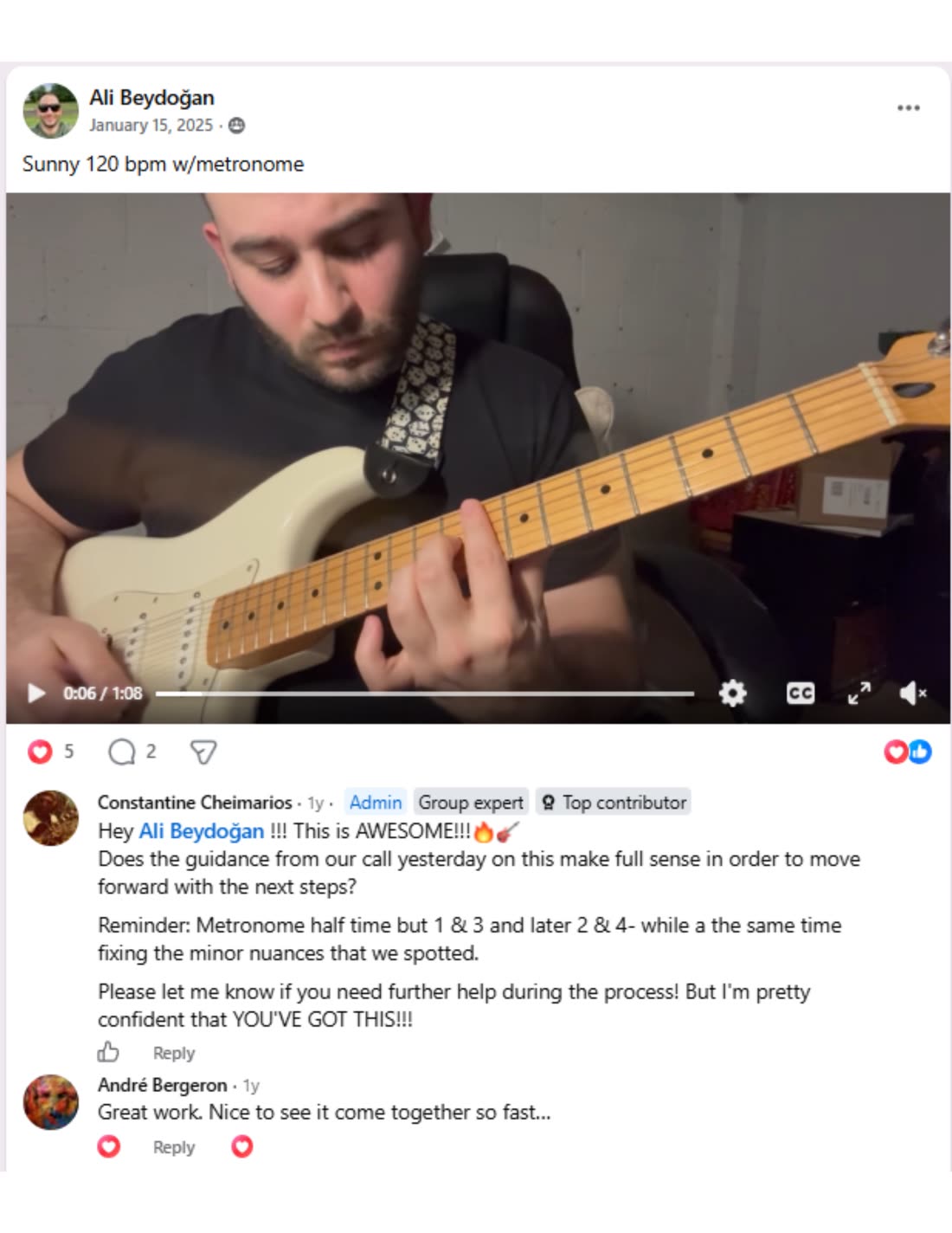
Therefore in MGL we take the concept of accountability really seriously, because we know how powerful and effective it can be for an individual’s musical growth. We have built a state of the art “Practice Log” that works as a refined and powerful environment for the student and the teacher to collaborate in an efficient way; we send regular personal reminders to our students to help them stay on track (optional, only if the student requests it) and we encourage them to submit weekly — or even daily — videos of their progress so that their progress can be evaluated week after week.
Finally, perhaps needless to mention, as their mentor I see my students in the live Zoom classes and check in on them regularly. Nothing beats live — on the spot — personalized guidance from an experienced professional… Human Being (!)
10Community, inspiration, collective support in your journey
If we don’t have each other in the musician community, we don’t have anything. Music, deep in its historical core, is largely a tribal and social form of art.
It is true that aspiring guitarists who want to reach a high level of musicianship generally need to isolate themselves and practice in solitude for several hours (woodshedding), however this is only half the story. The other half lies in the connections that we make through music and in being able to communicate to the world who we really are deep inside us, through our music.
Therefore, because we understand the importance and value of community in one’s personal musical journey, in MGL we have created an “inner circle” of like-minded guitarists who support each other and, most importantly, inspire each other.
One small example that makes all the difference in the world: every week I personally give a WEEKLY IMPROV CHALLENGE to our “inner circle” members and ask whoever wants to submit a video of their improvisation in our inner circle group channel. Everyone can watch everyone’s video, and offer or receive supportive feedback. Sometimes the Weekly Challenge is to collaborate with each other and create a piece of music — or an improvised solo together — in pairs or in groups. Our students don’t only learn from their mentor, but they also learn from — and with — each other.
This was just one example out of many. We also do Weekly Ear Training Sessions, Improv Workshops and much more… Our MGL inner circle basically functions as an inspiring & supportive environment for each individual.
We are offering Premium Guitar Coaching focused personally
on the individual and directed specifically towards Intermediate & Advanced
players.
How it works:
I
Introductory 1:1 Evaluation Call
Full-scan of your current musical situation
Diagnosis of your personal roadblocks
Clarifying your personal goals
Setting up your personal Game Plan
II
Lifetime Access to Our Step-by-Step Structured Curriculum
One time payment — yours forever
A robust and comprehensive catalogue of step-by-step lessons to stay on track towards mastery
long into your years as an advanced guitarist and musician. No need to scroll endless accounts
and fragmented lessons on various social media platforms.
There are 2 phases in the curriculum:
The MGL 12-month course
Lifetime learning (The MGL Grand Library)
We offer individualized practice curriculum roadmaps utilizing the most effective practice
tracking systems, constantly updated with Constantine until you’re confident to take it
on unassisted. So you know exactly what to practice and how to make the absolute most of your
precious limited practice time.
III
Daily Tasks Review and Personal Feedback
You will have direct access to Constantine to ask your questions — every day —
and to submit your video tasks for feedback. Direct Mentorship on a daily basis.
Time is probably the most valuable thing you have, therefore in MGL our top priority is to
make sure that you always have the most effective guidance that you need in order to make every
single practice session count!
IV
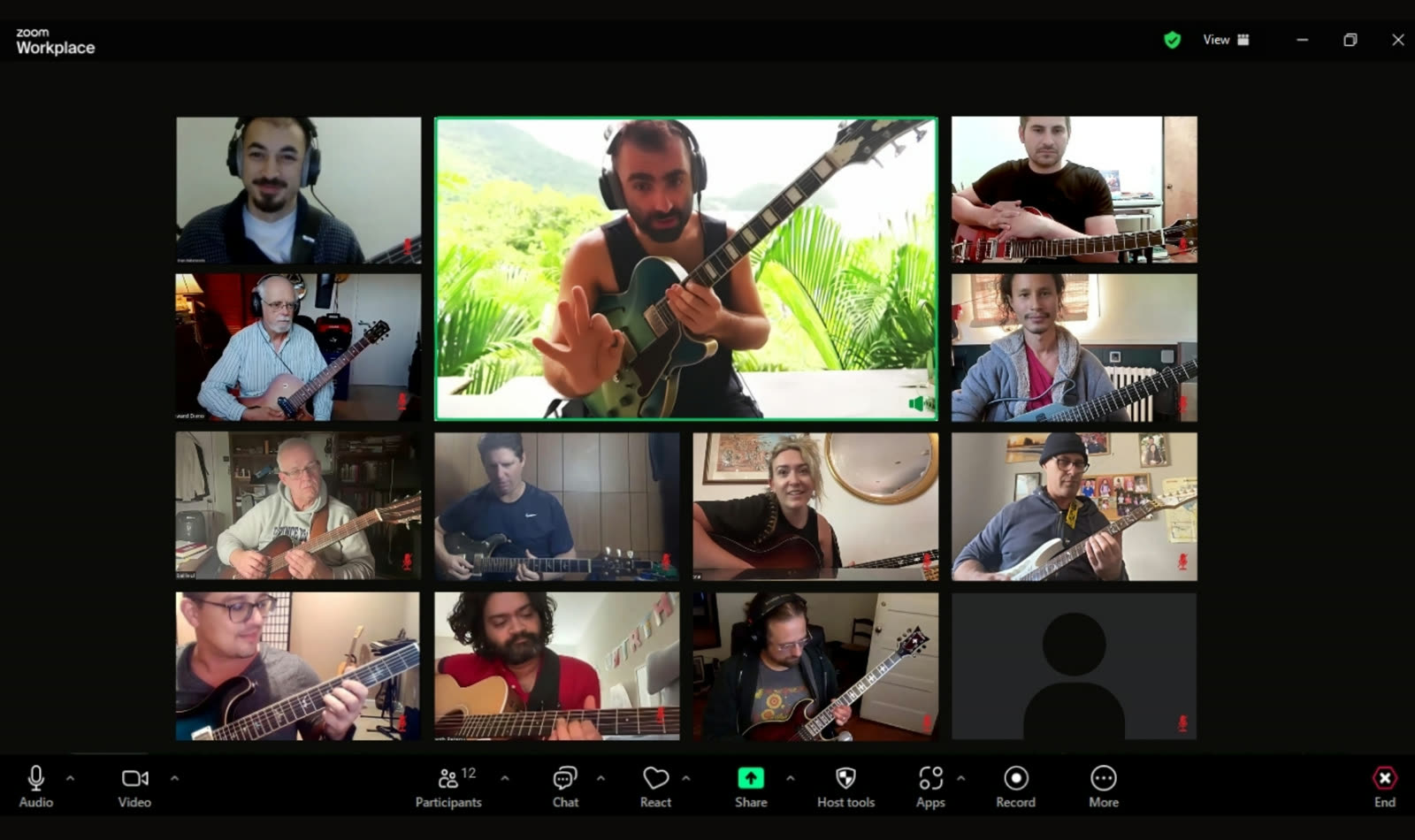
Live Weekly Guidance Calls & Workshops on Zoom
From regular weekly Q&A Guidance Calls, to Improvisation Workshops and Ear Training
Classes — we provide you with all the live interaction that you need in order to feel
supported and guided, personally & powerfully, in your journey. Directly from your
mentor.
Plus, we have several live classes every week and we cover every time zone in the globe!
V
Community & Inner Circle
We facilitate weekly Study Groups for our students who want to meet each other and study
(or jam) together — without a mentor. This is 100% optional but very powerful and
inspiring.
You will be part of our “inner circle” for life! So you can learn within an
active and dedicated like-minded community — where all the members share the same goal:
Fretboard Freedom!
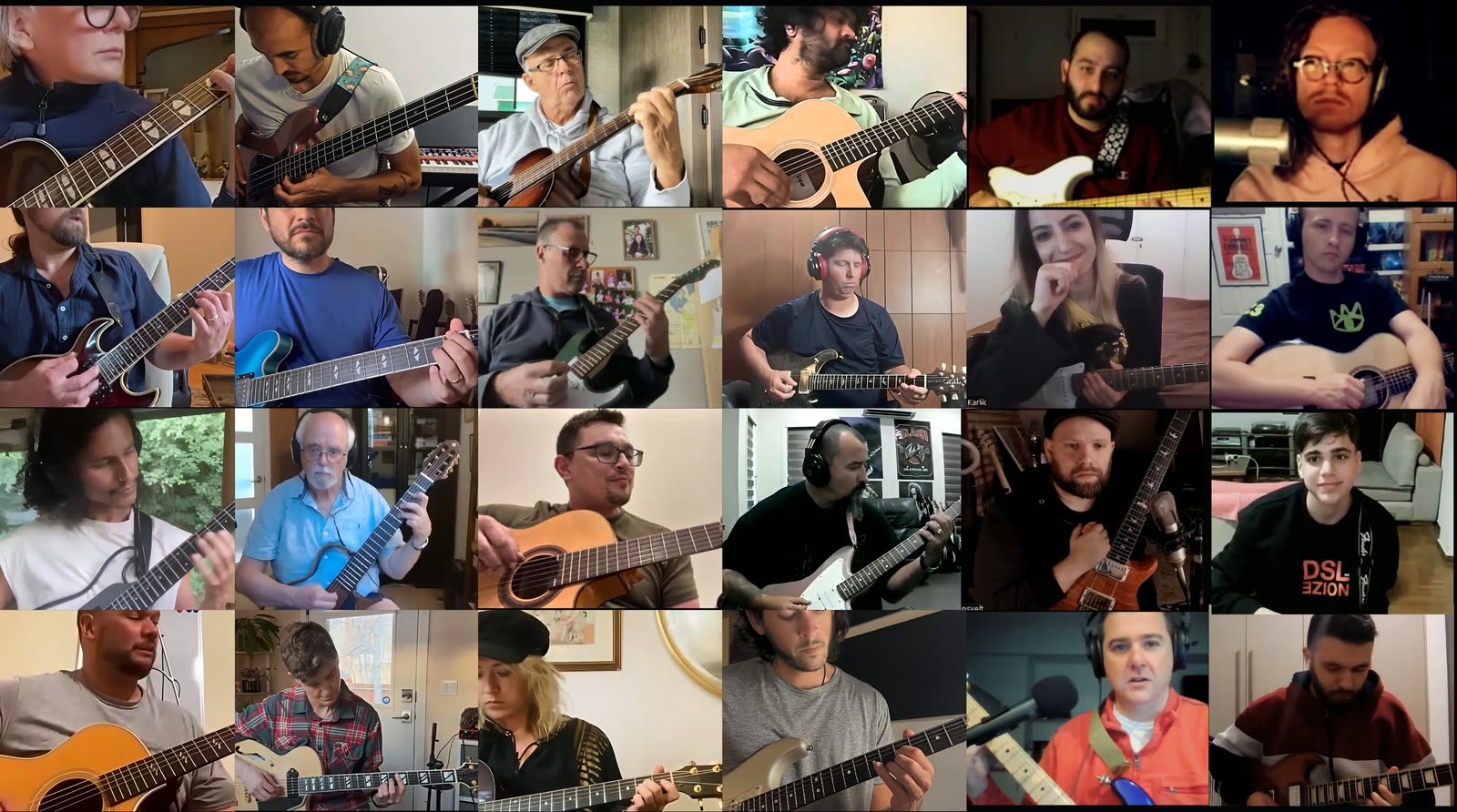
We give creative weekly challenges to our “inner circle” and sometimes we go
beyond everything and we ask them to collaborate and create together!
Here are a few examples out of the many:
Improv Collab #1 — Joe & Srikanth
Improv Collab #3 — Kareem & Evan
MGL students soloing over the same backing track — the Storytellers task
Modern Guitar Liberation is built around a simple idea:
Becoming a creative (and good) musician isn’t just about collecting more information.
It’s mostly about knowing what to do with it.
Many players reach a point where they know plenty of chords, scales, licks, and techniques but
still don’t feel happy with their playing, the dots don’t connect.
MGL provides a structured way and a process to connect those pieces.
You’ll have a structured curriculum, personal daily support, live interaction with your
mentor, and a community of fellow MGL members to exchange ideas and experiences with. But the
deeper purpose is to help you gradually become independent in your learning so you can
confidently guide your own musical growth insightfully & powerfully for years to come.
Our Students’ Success Stories
Since 2021 (the year that I created MGL) and since 2010 (the year that I began
teaching the guitar), there have been several cases of guitar players and musicians who were able
to break through their plateaus and accomplish great results through our work together.
See for yourself…
Kareem Cheng · UK
How would it feel to be able to “play what you have inside your head”?
The most common goal that I hear all the time from my fellow guitar players is “I wish I could play what I have inside my head.” We are talking about people who are creative individuals and have a burning desire within them to create their own music and bring it into the world — just like they have it in their heads — and this is something that can overwhelm most aspiring guitar players, when they have all this fire inside them but not enough musical skills to bring it to life.
This was exactly the case with my student Kareem from the UK, who was feeling overwhelmed and quite lost before we started working together. Being self-taught, and using YouTube and online automated courses to grow, he was struggling to connect the dots and to utilize his creative super-powers through his music. This is him 9 months after we started working together.
Joe Bazeghi · Oregon, US
Soloing with confidence, fluency & intention
A very common plateau amongst intermediate (sometimes even advanced) players is the fact that they are struggling to solo confidently and fluently with clear intention.
Here are two examples of my student Joe Bazeghi from Oregon, USA doing just that after a few months of working with me.
Irving Phillips · California, US
Mastering the Α & Ω of music = the art of rhythm
Unfortunately the most important skill in music is also the most overlooked and neglected one, and that is the ability to play with a strong sense of rhythm and solid timing.
For example, my student Irving from California, USA — although he already had good technical foundations on the instrument — was at the same time having a really difficult time and a great struggle when it comes to keeping time while playing, even when playing super simple stuff. Now he is able to play complex jazz / be-bop music with proper timing and solid rhythm, even though we are talking about music that is rhythmically complex and highly syncopated:
Some guitar players have a long background of classical studies and therefore they are able to read music notation really well. What usually happens to this type of people (electric guitarists with a classical background) is that they don’t really understand what they are playing and they can’t connect the dots between Melody and Harmony in a way that allows them to get creative and to implement their skills in their own improvisation and/or in their compositions. Because, simply put, although they play wonderfully and with great sound, they rely mostly on reading (or memorizing) the stave in order to play anything.
I have worked with such cases of guitar players — and it is usually one of the most wonderful experiences for both of us. Such a case (an astounding one) for example has been my student André from Minnesota, US, who had never before even tried to improvise. He literally had zero experience with improvisation prior to our MGL work and minimal experience with composition, although he could play pieces of high-level music (by reading and/or memorizing from the stave) that could steal your breath away.
Here he is now, doing his own unique Chord Melody (part improvisation, part composition) mixing chords and melodic phrases together — only 3 to 4 months after he joined MGL:
Evan Rabenasolo · France
True musicianship & the ability to improvise over jazz chord changes
The way I teach and lay out my methods — even on the guitar — is through a holistic understanding of the universal language of music, not through muscle-memory/parrot-based systems (such as CAGED, TABs, diagrams, etc.) which are specific only to the guitar and do not make any sense whatsoever to any other instrument.
For example, my student Evan from France was having a really hard time for several years to connect the puzzle on both his instruments (he plays bass & piano) and found it really tough to be intentional and confident when it comes to “on the spot” improvisation over chord changes — especially on Jazz Standards. Although, to be fair, he was already a great player before we even started working together, he relied heavily on memorizing musical information and on playing purely by feel/ear when he was improvising. Therefore, he was unable to properly improvise over more complex chord progressions and to be intentional about his note choices.
That’s not the case anymore though. He has now grown into a confident improviser who can play with clear intention over relatively complex chord changes. Notice in the following video, for example, how he does not only solo fluently, but on top of that his phrases actually land on the chords beautifully and intentionally. Harmony (Chord Changes) and Melody (Soloing) for him are now one unified musical environment that he lives in:
Essentially the underlying difference between MGL and most guitar programs out there is the fact
that we treat musical practice as an Art form in itself — not just as a
means to reach a destination or to achieve a certain goal.
When a guitar player (or any musician for that regard) learns how to walk the Path powerfully,
mindfully and intentionally, then the objective stops being the Goal, but the Path in itself.
Because if one knows how to walk the Path powerfully and intentionally,
then any Goal becomes feasible.
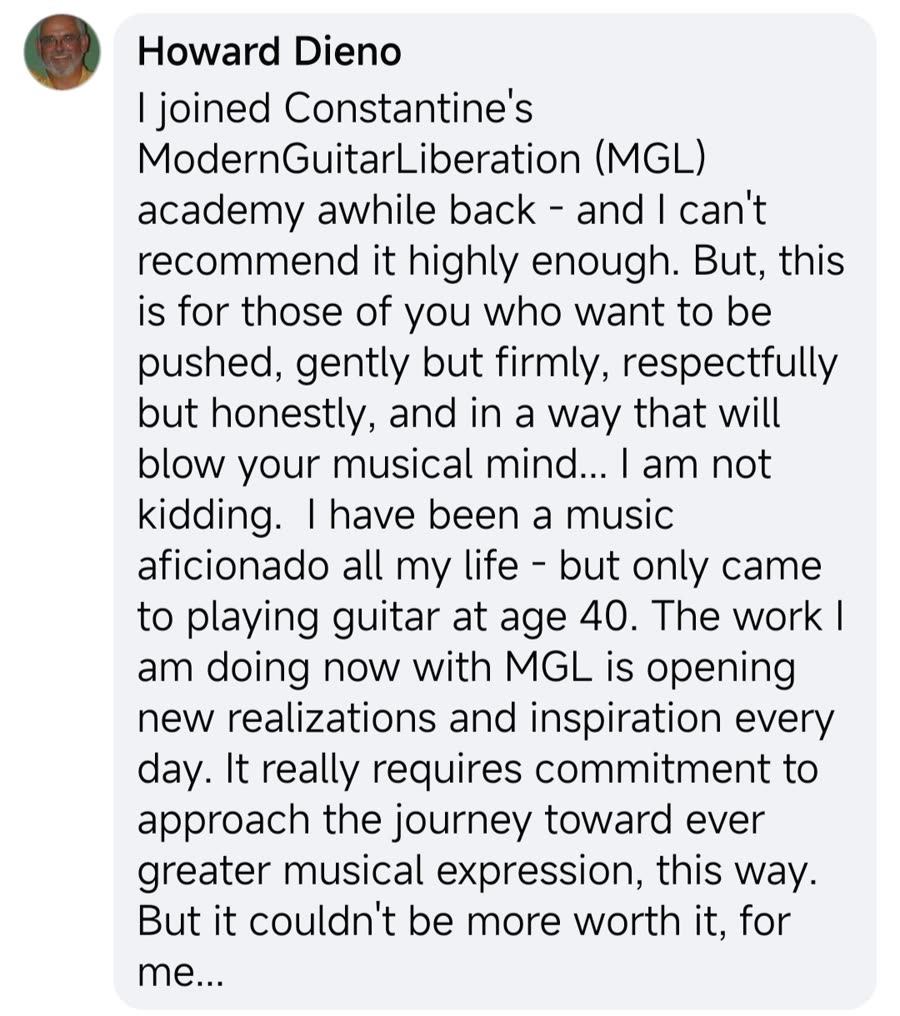
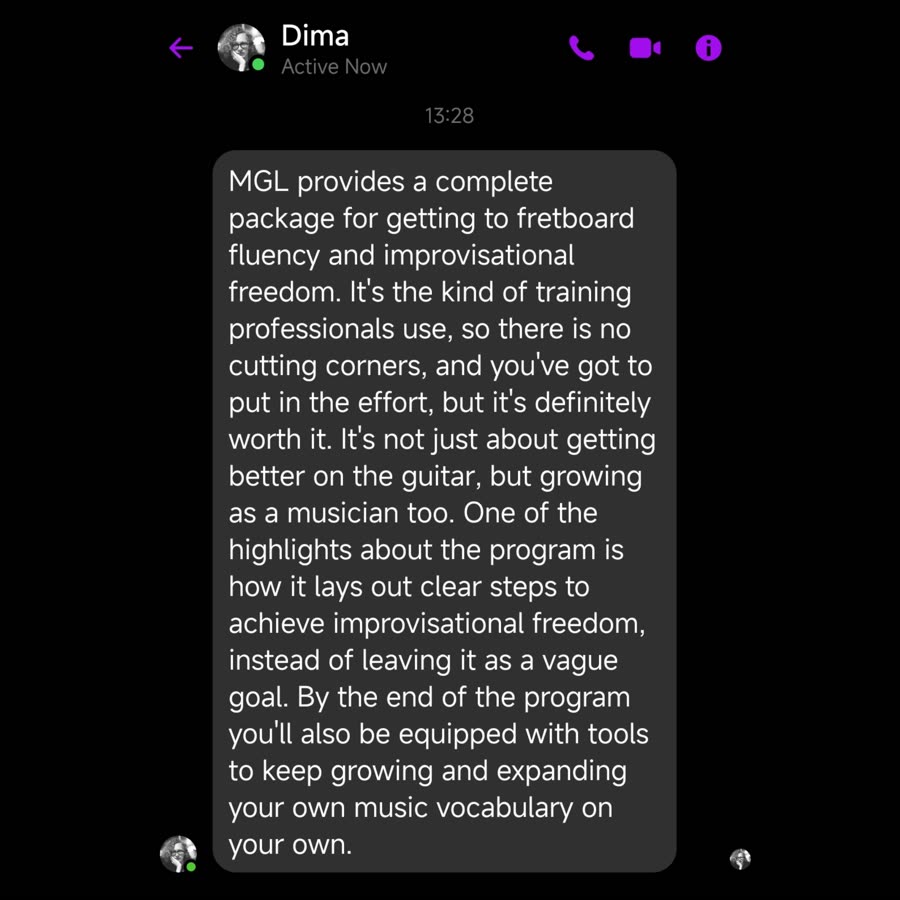
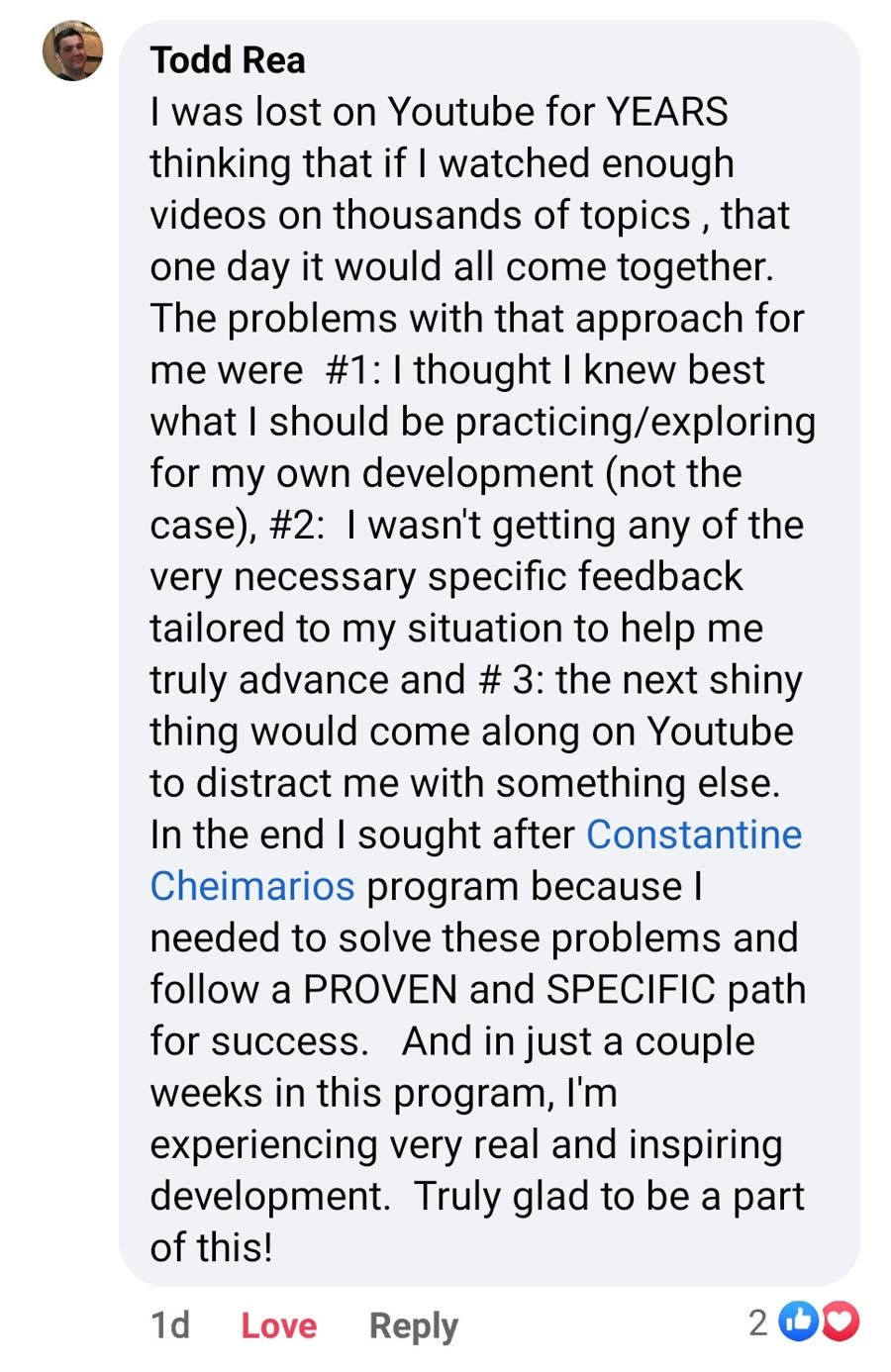
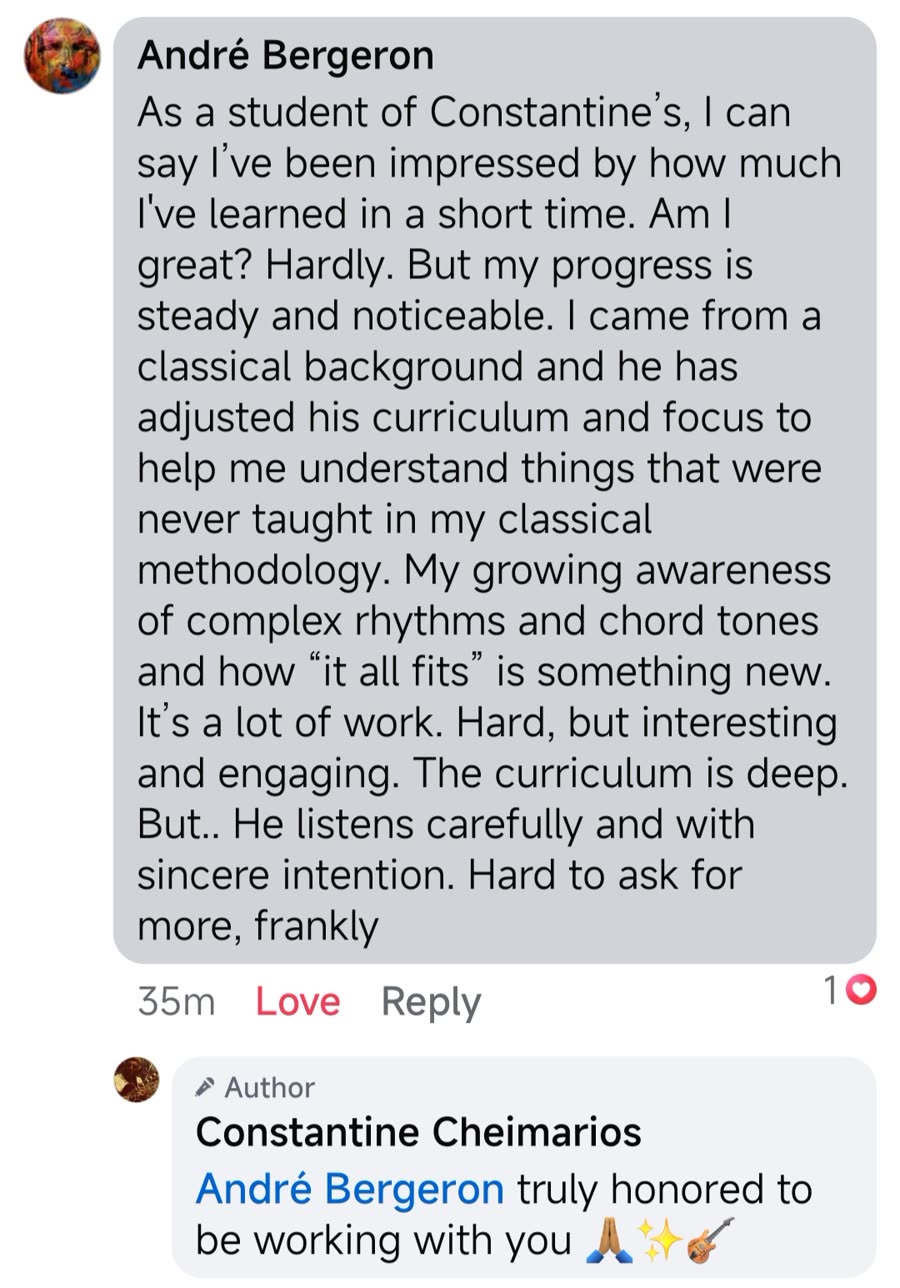
Testimonials
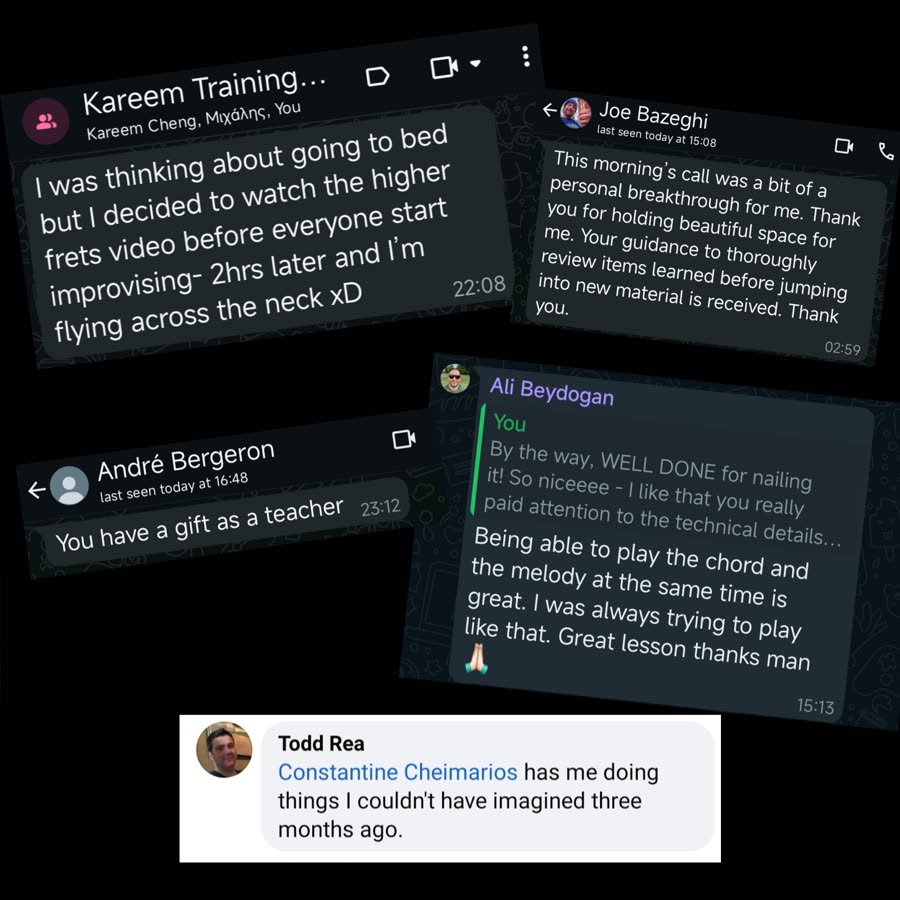
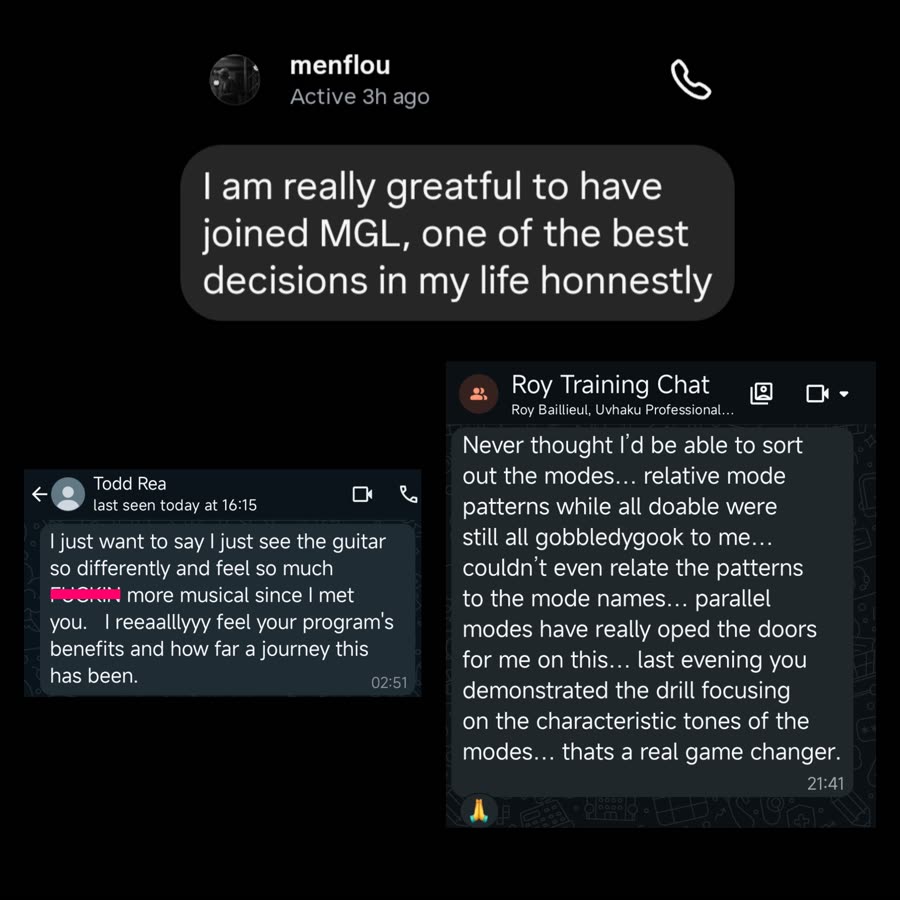
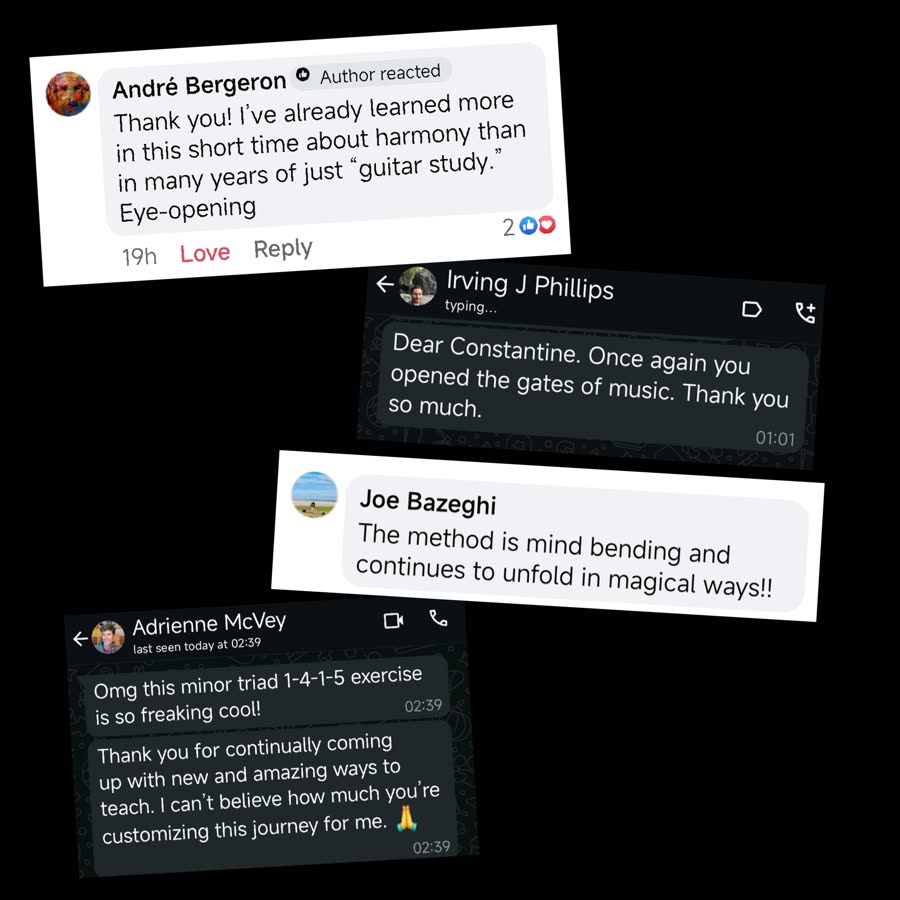
Don’t just take my word for it…
Book a Free Call
If all of the above sound like exactly what you need, then I (Constantine) would be happy to
meet you personally & have a friendly Zoom Call to discuss your musical situation in depth
and discover whether we would be a good fit to start working together.
The following lessons are all free to watch and have been categorized based
on 3 different levels of musical skill & knowledge:
Level #1:Solid Foundations = Grounding to the Earth
How to practice scales if your intention is to improvise freely across the
fretboard:
Have you ever tried playing Chords in between your Soloing? This lesson
offers a basic entry-level introduction on accompanying your own solos (in a Blues style):
Building off from the previous lesson, here we will learn how to accompany
our soloing with chords in between … over Chord Changes!!! We are using a 12-bar Blues in
C minor:
This is in my opinion the first lesson that everyone should be taught about
the MODES. Basically we learn how to play all the 7 Modes — all starting from the same
Root Note (aka “Parallel Modes”) and we do that on ONE string only. There is much
more in the video — and the best thing is that this lesson takes you step-by-step:
This is the second lesson on the modes — after one has mastered the
previous one. How to make your Modes fully accessible as an improviser by connecting them to the
one and only… your beloved Pentatonic:
Level #2:Interstellar Breakthrough
The Diagonal Method = your KEY to break away from the
“box-based” memorization of the fretboard:
Building off from the previous lesson, in this one we look at how to
improvise using the Diagonal Method (strongly recommend to master the Diagonal Method
first):
Learn your Open Triads (aka “Spread Triads”) and unlock immense
amounts of creativity and beauty in the way that you sound:
Start merging the Melodic (Soloing) & the Harmonic (Chordal) Roles of
your instrument into ONE unified musical space — and break through the “eternal
intermediate barrier”:
OMG… This one is a total killer(!!) It hurts your brain if you
actually try it — but it forces you to see the fretboard as MUSIC rather than Shapes or
Frets…
Have you ever thought of playing one of your favorite solos as a Chord Melody?
This is Comfortably Numb by David Gilmour turned into “Chord Melody”. Enjoy!
Level #3:Intergalactic Odyssey
(In order to be able to follow the lessons of this level, you need to know at
least 2 things really well: your notes on the fretboard and your intervals)
Okay, so this one is not just a “lesson” per se. It’s
basically a complete breakdown of the knowledge and the skills of a life-long musical learning
journey. In this one I am basically giving away to you all the “Secrets” within
45 minutes … for free:
In order to help you with the previous lesson “The Secrets to
Improvisation over Chord Changes” I have also created a PDF with all the Chord Voicings
used in the video (diagrams). Here it is, also for free:
When Chords start becoming Melodies & melodies start becoming
Chords:
Building off from the previous lesson and taking it to the next
level(!!):
In this one we are exploring a ii V i progression in G minor and how we can
use common tones to make our chord changes smooth. We also look at how to spice up our Dominant
Chord (V) by turning it into a V7b9 and into V7#5. An interesting one for those of you who are
lovers of Harmony and (mildly) exotic sounds!
P.S.: This one is from a zoom 1:1 class with a student.